Investment Casting Manufacturer
Precision Steel Cast is an investment casting manufacturer delivering complex, near-net-shape stainless steel components through the silica sol process. Investment casting — sometimes called precision casting or lost wax casting — lets us reproduce intricate geometry that would be costly or impossible to machine from bar stock. For buyers, that translates into fewer purchased parts, less scrap and a finished component that performs as designed from the first article.
As a precision investment casting supplier, we control the entire route: tooling, wax pattern, ceramic shell, melt, machining and finishing all happen inside our own plant. That control is what protects both tolerance and lead time when a program scales from prototype to production.
Introduction
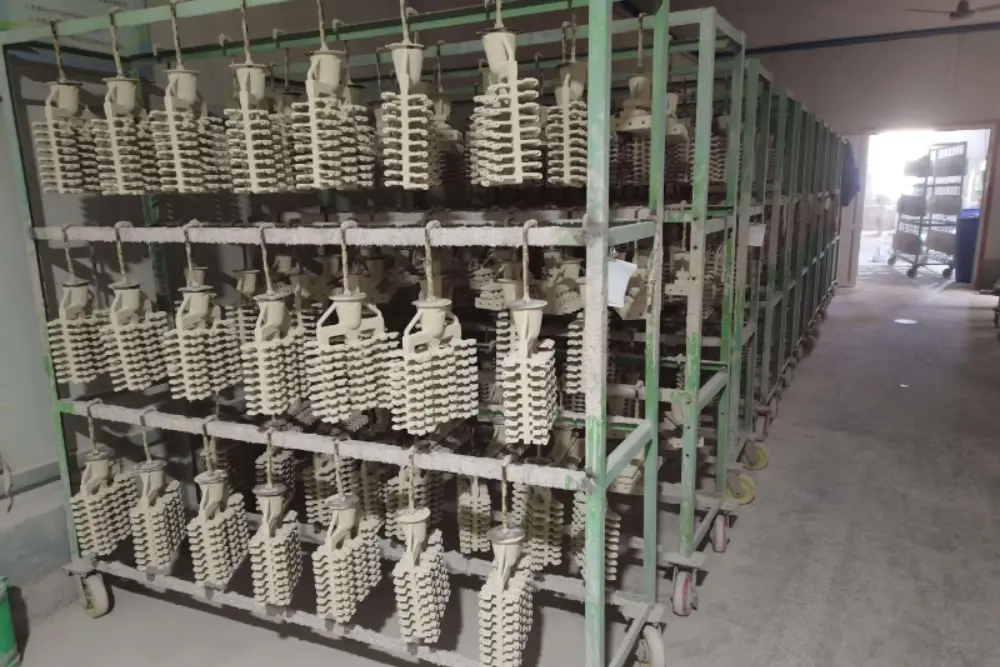
Investment casting is the process of choice when a part demands fine detail, thin sections, tight tolerances or integral features that eliminate secondary assembly. Instead of removing material to make a shape, we build a ceramic shell around a disposable wax pattern and pour molten metal into the void it leaves behind. The result is a component whose geometry is defined by the pattern, not by the limits of cutting tools.
For engineers, the appeal is design freedom: internal passages, asymmetric contours and integrally cast bosses appear in the as-cast part rather than as separate welded additions. For purchasers, the appeal is cost at volume — once tooling exists, each additional part consumes only wax, shell material and melt time, not hours of machining.
Against sand casting, the process yields smoother surfaces and avoids parting-line flash; against machining from solid stock, it slashes the buy-to-fly ratio so you pay for the near-net shape rather than for chips. Those advantages compound across a production run and are why engineers reach for precision investment casting when a part is both complex and made in quantity.
Manufacturing Capability
Precision Steel Cast runs a fully integrated investment casting operation:
| Stage | Capability |
|---|---|
| Tooling | In-house die and fixture design for wax injection and assembly. |
| Wax | Automatic wax injection producing consistent, low-variation patterns. |
| Shell | Silica sol slurry and stucco layers form a fine, dimensionally stable mold. |
| Melt | Induction furnaces with spectro-verified chemistry control. |
| Machine | 3, 4 and 5-axis CNC cells finish critical and mating surfaces. |
| Finish | Electropolishing, passivation, shot blasting and pickling on site. |
| Inspect | Spectrometer, CMM and NDT confirm chemistry, geometry and integrity. |
Because every stage is under one roof, a change requested by your engineer reaches the foundry floor without a vendor in between. That is the practical meaning of a vertically integrated investment casting manufacturer: accountability stays in one place.
Production Process
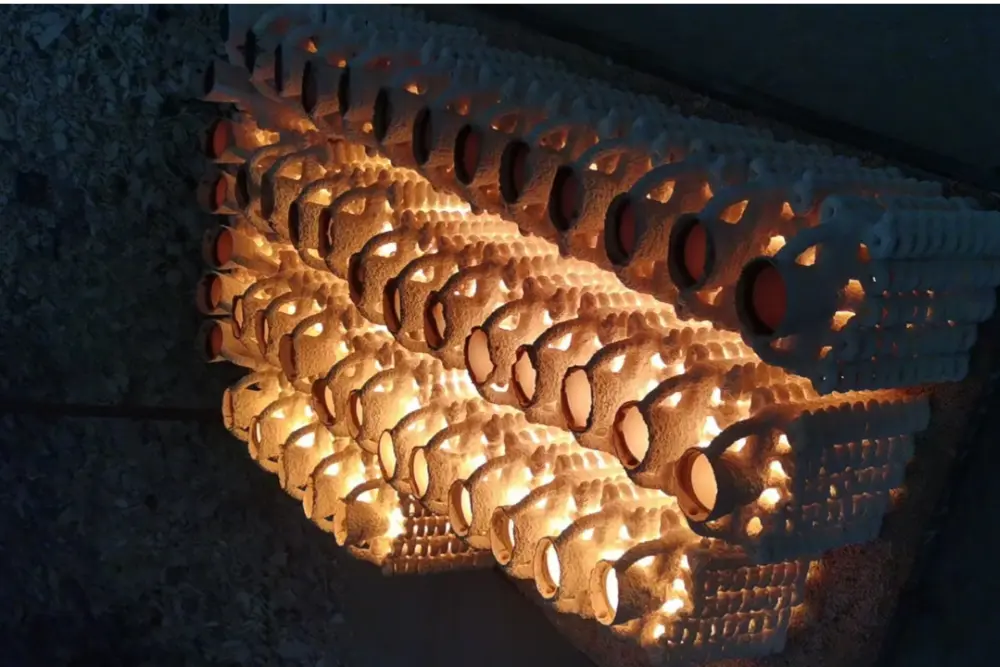
The process starts with a wax pattern, which is assembled to a runner and coated with successive ceramic layers. When the shell is strong enough, the wax is drained away and molten stainless steel is poured into the cavity. After solidification the shell is broken off, the casting is cut from its gate, machined where needed, finished and inspected.
Each heat is logged, each shell is built to a controlled layer count, and each finished part is measured against the model. That discipline is what lets a precision investment casting supplier repeat a difficult part run after run.
Material Options
| Grade | Equivalent | Notes | Typical use |
|---|---|---|---|
| 304 | CF8 | Versatile austenitic, best value | Food, architectural, general |
| 316 | CF8M | Molybdenum for chloride resistance | Marine, pump, valve, chemical |
| 17-4PH | 630 | Precipitation-hardened strength | Structural, wear parts |
| 2205 | — | Duplex strength and pitting resistance | Aggressive media, seawater |
| Carbon / Alloy | — | Reviewed on request | General engineering |
We lead with stainless because it is where investment casting delivers the most value — corrosion resistance combined with complex shape. Where another alloy is a better fit, our metallurgy review determines whether it is castable with our shell system and melting practice.
Surface Finishing
Surface condition governs both appearance and service life, so we finish parts in-house:
- Electropolishing — smooths and passivates the surface for hygienic and corrosive duty.
- Passivation — reinforces the chromium oxide film that makes stainless stainless.
- Shot blasting — uniform matte texture and stress relief.
- Pickling — removes heat tint and scale after casting or welding.
In-house finishing means we do not ship rough castings out for treatment and wait. The part leaves our dock ready to install.
Tolerance Capability
Investment casting holds as-cast tolerances to ISO 8062 CT4–CT6, with the tightest grades applying to smaller, thinner parts. Functional surfaces — bores, threads, sealing faces, datums — are CNC machined to ±0.01 mm so they mate with surrounding components without rework.
We quote to your drawing and report to recognized international standards, so the dimensions on our inspection sheet correspond exactly to the limits on your specification. Threads are cut or rolled to standard series; bores are held concentric; seating faces are flat-verified. For parts in a pressure boundary we apply density and leak controls appropriate to the rating.
Quality Control
Quality is built into the process, not added at the end:
- Chemistry control — direct-reading spectrometer verification before pour.
- Dimensional control — CMM measurement against the 3D model.
- Integrity control — dye penetrant, magnetic particle or radiographic NDT where specified.
- Traceability — material certificate, dimensional report and process records with every shipment.
This is the evidence a qualified buyer needs to bring a new investment casting manufacturer into a safety-critical supply chain.
Applications
Investment cast components from Precision Steel Cast are used in:
- Pump impellers, volutes and housings
- Valve bodies, bonnets and trim
- Turbine and compressor hardware
- Food machinery mixers and fittings
- Architectural and marine hardware
- Automotive brackets and sensor housings
Every application is screened for load, media and temperature so the alloy, tolerance and finish match the duty. A bracket in a dry cabinet is not specified like an impeller in brackish water.
Industries Served
- Pump & Valve — dense, pressure-capable castings with optional leak testing.
- Marine — 316 and duplex parts built for continuous seawater exposure.
- Automotive — stable-tolerance parts for volume assembly.
- Food Machinery — electropolished, hygienic components.
- General Engineering — complex shapes that replace fabricated assemblies.
We serve these industries worldwide, so our packing and documentation follow international shipping and procurement norms. New buyers can start with a sample batch to prove tooling and finish before volume commitment.
Design for Manufacturability
The cheapest investment casting is the one designed for the process from the start. We review every inquiry for wall uniformity, draft, parting line and machined-feature placement, and propose changes that remove operations, stabilize the shell or avoid shrinkage before tooling is cut. A small radius or fillet that helps metal fill cleanly can save a machining pass on every part for the life of the program.
That early dialogue protects both cost and performance. Good design for manufacturability is the difference between a casting that machines easily and one that fights you at every step.
Lead Time, Tooling and Logistics
Prototype tooling can be turned quickly so form and function are proven before hardened production dies are cut. Once validated, we harden the tool and schedule volume runs against your milestones. Minimum order quantities are flexible and set per project, because a sensible first order should de-risk both sides.
Castings are packed for international transit with anti-corrosion measures where ocean freight demands it. We ship to North America, Europe and Asia so components arrive in step with your build plan rather than sitting in storage.
Why Choose Precision Steel Cast
Buyers choose Precision Steel Cast because one partner owns casting, machining and inspection. That integration protects lead time, simplifies traceability and ends the finger-pointing that happens when casting and machining sit with different vendors. With broad stainless coverage, in-house finishing and responsive engineering, we are a dependable precision investment casting source for both first articles and recurring production.
When you consolidate pattern, casting, machining and inspection into a single accountable partner, you also consolidate risk. There is one quality system to audit, one plan to track and one team to call when a drawing changes — which is exactly what program managers want as volumes climb.
Technical FAQ
Investment casting is best for complex, near-net-shape metal parts that would otherwise need heavy machining or welding. It captures thin walls, internal passages and fine detail in stainless and other alloys.
We specialize in stainless grades 304, 316, 17-4PH and 2205 duplex, and also review carbon, low-alloy and other castable metals on request.
As-cast dimensions typically hold ISO 8062 CT4 to CT6; CNC machining refines sealing faces, bores and threads to ±0.01 mm.
Yes, tooling is built in-house. Rapid prototype tooling lets you validate form and function before committing to hardened production dies.
Every order can include spectrometer chemistry verification, CMM dimensional reports, NDT where required, and full material traceability documents.
Send drawings, alloy, quantity and tolerances through the quote form or to hank@precisionsteelcast.com; we return a feasibility review and quote within 24 hours.
Request a Quote
Precision Steel Cast is ready to support your next precision casting program. Explore our related capabilities:
- Stainless Steel Casting Manufacturer
- Lost Wax Casting Manufacturer
- CNC Machining Services for Castings
Visit our main site at Precision Steel Cast or email hank@precisionsteelcast.com.