Lost Wax Casting Manufacturer
Precision Steel Cast is a lost wax casting manufacturer producing intricate stainless steel components through the wax-pattern method — the same process often called investment casting. By shaping parts in disposable wax first, we capture geometry that machining or fabrication cannot reach economically: thin walls, undercuts, internal passages and integrally cast detail. The wax is then “lost” as molten steel takes its place.
As a precision lost wax casting supplier, we run the whole chain in-house — pattern, shell, melt, machining and finishing — so a complex part moves from wax to finished component without leaving our control.
Introduction
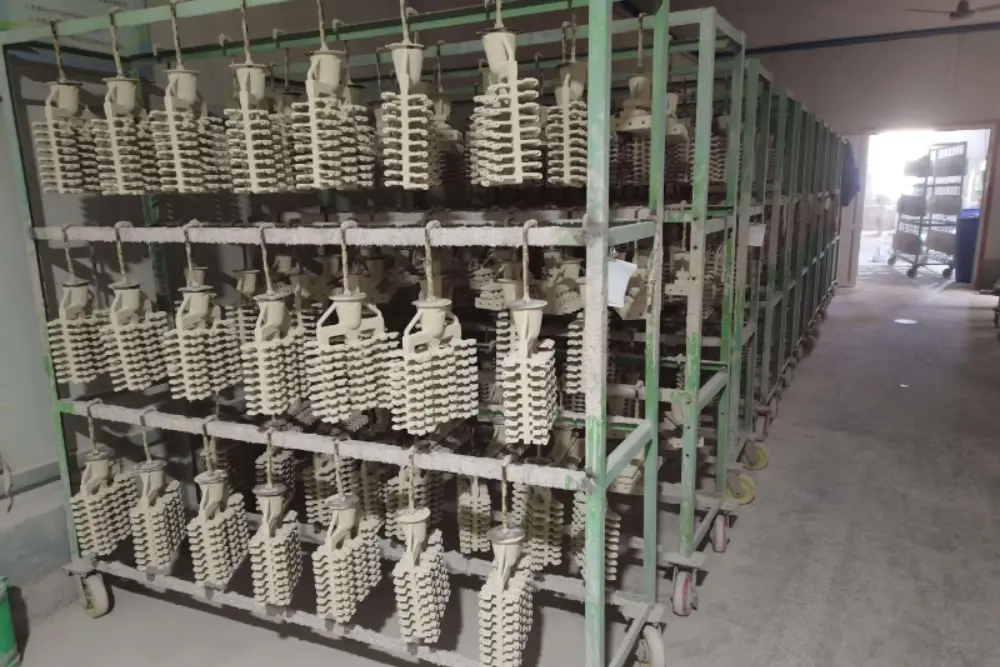
Lost wax casting is one of the oldest metal-forming methods and remains the most capable for complex shapes. The principle is simple: make an exact wax replica of the part, encase it in ceramic, melt the wax away and fill the cavity with metal. The simplicity hides real craft — shell composition, wax formulation and pour practice decide whether a difficult part comes out dense and dimensionally true.
For designers, the method removes the constraints of cutting tools. For buyers, it consolidates assemblies, cuts scrap and delivers a near-net-shape part that needs far less machining than a billet would. A stainless lost wax casting is therefore both a performance upgrade and a cost lever at volume.
A further benefit is material efficiency. Because the wax pattern defines only the final shape, the surrounding shell and gating are the only consumed media; almost all the poured stainless ends up in the part rather than as machining swarf. In an alloy where material cost is a real fraction of the piece price, that yield matters.
Manufacturing Capability
Precision Steel Cast operates the complete lost wax route:
| Stage | Capability |
|---|---|
| Pattern | Wax injection and hand assembly of patterns to runners. |
| Shell | Silica sol slurry and stucco layers build a fine, stable mold. |
| Dewax | Autoclave or flash dewax leaves a clean, cavity-true shell. |
| Melt | Induction furnaces with spectro-verified stainless chemistry. |
| Machine | 3, 4 and 5-axis CNC cells finish critical surfaces. |
| Finish | Electropolishing, passivation, shot blasting and pickling. |
| Inspect | Spectrometer, CMM and NDT confirm chemistry and geometry. |
Owning every stage is what lets a lost wax casting manufacturer promise repeatability — the pattern shop and the foundry share the same building, the same shift and the same quality system.
Production Process
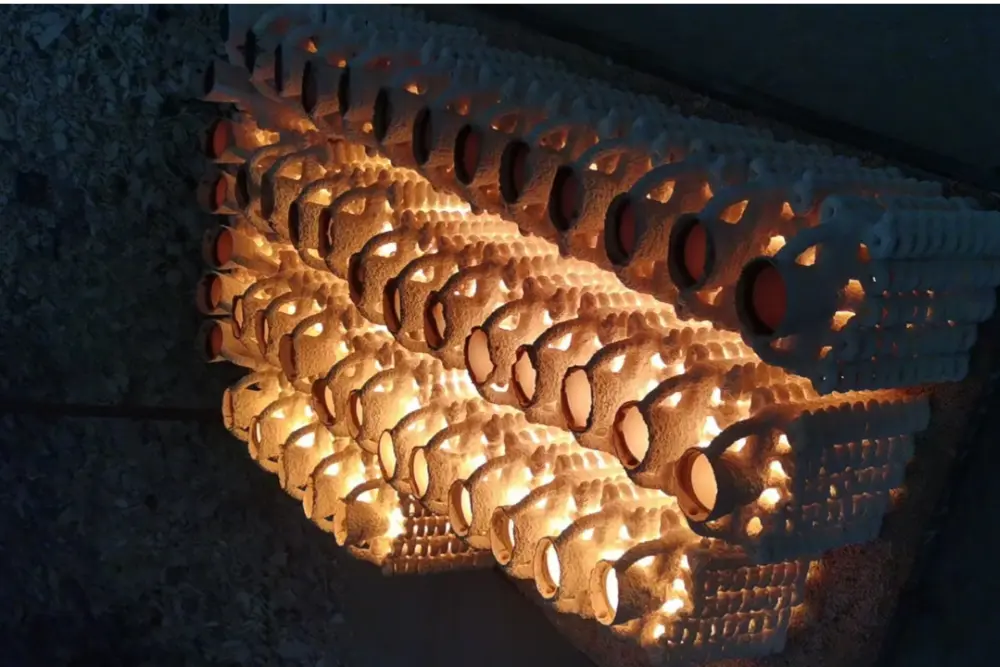
We begin with a wax pattern, assemble it to a tree, and coat it with successive ceramic layers until the shell is thick enough to resist the pour. The wax is then removed and molten stainless fills the cavity. After cooling, the shell is broken away, the casting is cut from its gate, machined where required, finished and inspected.
Every pattern is checked against master gauges and every shell is built to a controlled layer count, so the part that ships in month twelve matches the approved sample from month one.
Material Options
| Grade | Equivalent | Notes | Typical use |
|---|---|---|---|
| 304 | CF8 | Best-value austenitic | Food, architectural, general |
| 316 | CF8M | Chloride-resistant | Marine, pump, valve, chemical |
| 17-4PH | 630 | High strength, hardenable | Structural, wear parts |
| 2205 | — | Duplex, pitting-resistant | Aggressive media, seawater |
| 2507 | — | Super duplex, extreme duty | Offshore, high pressure |
Stainless is our core because lost wax casting and corrosion-resistant alloys are a natural pair: the process delivers the shape, the alloy delivers the service life. Where another castable metal is a better fit, we review it against our shell and melt system.
Surface Finishing
Finish determines how a part performs in service, so we treat it as a process step, not an afterthought:
- Electropolishing — smooths and passivates for hygienic and corrosive duty.
- Passivation — strengthens the chromium oxide layer that defines stainless.
- Shot blasting — uniform matte texture and stress relief.
- Pickling — clears scale and heat tint after casting or welding.
Because finishing is in-house, parts leave our dock ready to install rather than waiting on a subcontractor.
Tolerance Capability
Lost wax casting holds as-cast tolerances to ISO 8062 CT4–CT6, with the finest grades on smaller, thinner parts. Surfaces that must mate — bores, threads, sealing faces, datums — are CNC machined to ±0.01 mm so assemblies fit without rework.
We quote to your drawing and report to common international standards, so our inspection numbers map directly to your specification limits. Threads follow standard series, bores stay concentric, and seating faces are flat-verified. Pressure-boundary parts get the density and leak controls their rating demands.
Quality Control
Quality is engineered into the route, not bolted on at the end:
- Chemistry control — direct-reading spectrometer verification before pour.
- Dimensional control — CMM measurement against the 3D model.
- Integrity control — dye penetrant, magnetic particle or radiographic NDT where specified.
- Traceability — material certificate, dimensional report and process records with every shipment.
That evidence is what lets a qualified buyer bring a new lost wax casting manufacturer into a safety-critical program with confidence.
Applications
Lost wax cast stainless parts from Precision Steel Cast appear in:
- Pump impellers, volutes and housings
- Valve bodies, bonnets and trim
- Marine cleats, bollards and deck hardware
- Food machinery mixers and fittings
- Decorative and architectural hardware
- Automotive brackets and sensor housings
Each application is screened for load, media and temperature so the alloy, tolerance and finish match the duty. A marine cleat is specified nothing like a food mixer shaft, and our quoting makes that distinction explicit.
Beyond these named uses, the method suits any stainless part where geometry drives cost: brackets with integral bosses, housings with internal ribs, and fittings that would otherwise be welded from several pieces. If a current design is expensive to fabricate, sending us the drawing is the fastest way to learn whether lost wax casting collapses that cost into a single, robust component.
Industries Served
- Pump & Valve — dense, pressure-capable castings with optional leak testing.
- Marine — 316 and duplex parts built for continuous seawater exposure.
- Automotive — stable-tolerance parts for volume assembly.
- Food Machinery — electropolished, hygienic components.
- General Engineering — complex shapes that replace fabricated assemblies.
We serve these industries worldwide, so packing and documentation follow international shipping and procurement norms. New buyers can start with a sample batch to prove tooling and finish before volume commitment.
Design for Manufacturability
The most economical lost wax casting is designed for the process from the first sketch. We review every inquiry for wall uniformity, draft, parting line and machined-feature placement, and propose changes that remove operations, stabilize the shell or avoid shrinkage before tooling is cut. A fillet that helps metal fill cleanly can delete a machining pass on every part for the life of the program.
That early conversation protects both cost and performance, and it is why we ask for drawings early rather than after tooling is committed.
Prototype to Mass Production
Rapid prototype tooling lets you validate form and function before hardened production dies are cut. Once the design is proven, we harden the tool and schedule volume runs against your milestones. Minimum order quantities are flexible and set per project, because a sensible first order should de-risk both sides.
Castings are packed for international transit with anti-corrosion measures where ocean freight demands it. We ship to North America, Europe and Asia so components arrive in step with your build plan rather than sitting in storage.
Why Choose Precision Steel Cast
Buyers choose Precision Steel Cast because one partner owns pattern, casting, machining and inspection. That integration protects lead time, simplifies traceability and removes the finger-pointing that happens when those steps sit with different vendors. With broad stainless coverage, in-house finishing and responsive engineering, we are a dependable precision lost wax casting source from first article to recurring production.
The wax route also ages well. Once a pattern and shell recipe are qualified, repeating them is routine, so the tenth-thousand part matches the first article. That repeatability is what lets a lost wax casting manufacturer support a program from a handful of prototypes through to steady-state volume without re-qualifying the process.
Technical FAQ
Lost wax casting — also called investment casting — forms a part by building a ceramic shell around a wax pattern, melting the wax out, and pouring molten metal into the cavity it leaves.
We focus on stainless grades 304, 316, 17-4PH, 2205 and 2507 duplex, and review other castable alloys on request.
Parts range from 0.01 kg to 100 kg with as-cast tolerances of CT4 to CT6; CNC machining holds functional surfaces to ±0.01 mm.
Yes. We produce rapid prototype tooling to validate design, then harden tooling for volume runs scheduled to your milestones.
Spectrometer chemistry verification, CMM dimensional inspection, NDT where required, and full material traceability with every shipment.
Send drawings, alloy, quantity and tolerances via the quote form or to hank@precisionsteelcast.com; we reply with a feasibility review and quote within 24 hours.
Request a Quote
Precision Steel Cast is ready to support your next lost wax casting program. Explore our related capabilities:
- Stainless Steel Casting Manufacturer
- Investment Casting Manufacturer
- CNC Machining Services for Castings
Visit our main site at Precision Steel Cast or email hank@precisionsteelcast.com.